
Production Manufacturing Services
From board loading to a fully tested, coated and finished assembly — small volumes accepted. PCBs designed for production are generally cheaper to manufacture; if you're unsure about production-ready design, contact us for general advice.
Printed Circuit Board Loading
Loading a PCB typically involves three areas, each with different methods of component preparation and placement.
PCB loading methods
- Surface Mount — the most common design today: reels of components are placed by a Pick & Place machine configured to position each component in its designated spot.
- Through Hole — generally involves pre-preparation of the component for insertion, such as lead forming and bending.
- Custom components — increasingly varied and complex, often requiring the manufacturer's special placement instructions.
Soldering methods
- Surface-mount components are placed onto solder paste and sent through an oven with an individual soldering profile.
- Through-hole components are typically wave-soldered, or hand-soldered when in a difficult position on the board.
- Custom components may use either technique, be press-fitted, or use another specialised method.
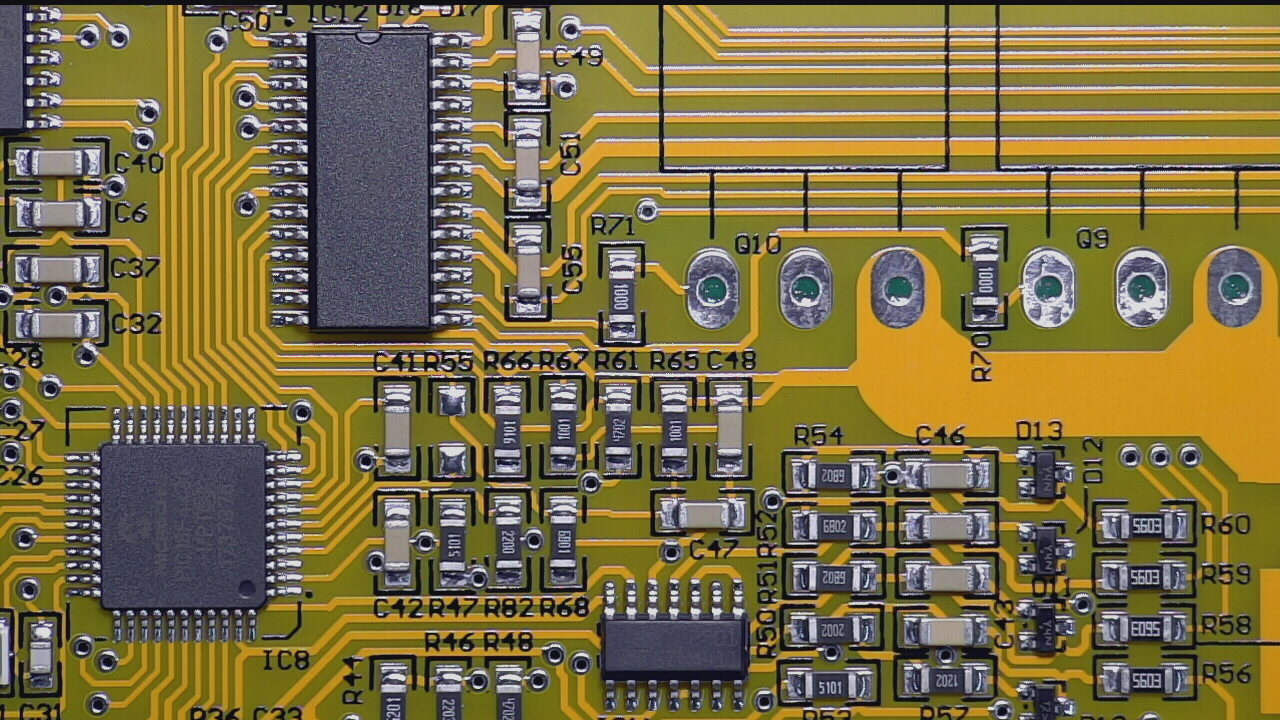
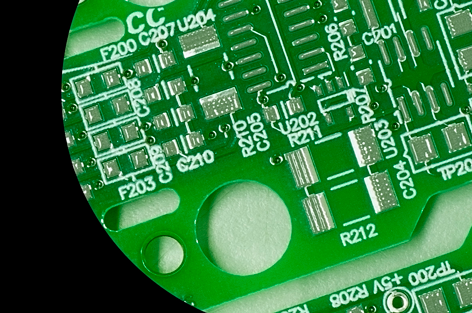
Automatic Optical Inspection (AOI)
Our AOI uses a 3-CCD colour camera and additional cameras to visually inspect a wide range of defects on a PCB — checking solder joints and confirming component identification across every assembled board.
PCB Board Testing — Full ICT / MDA
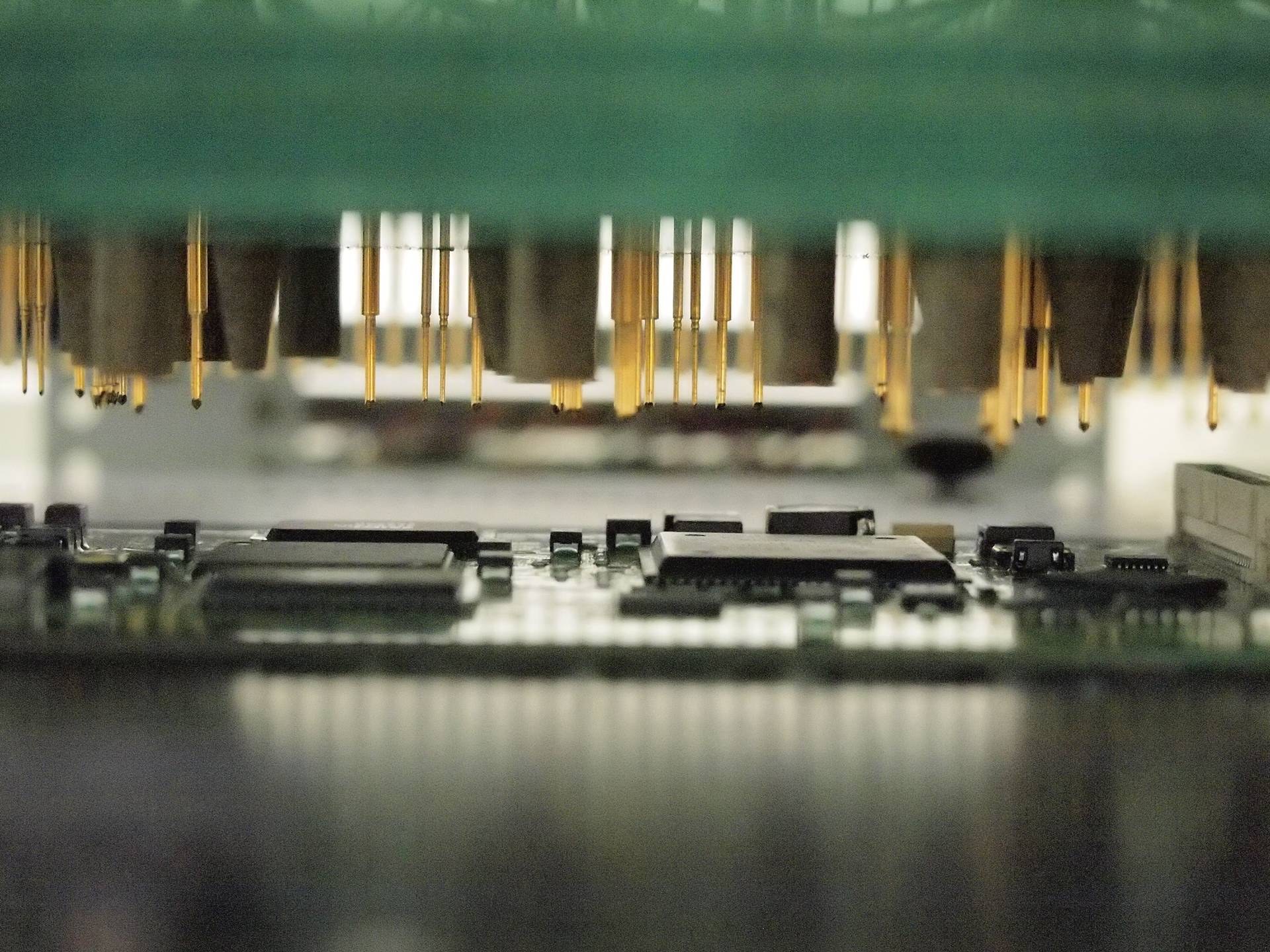
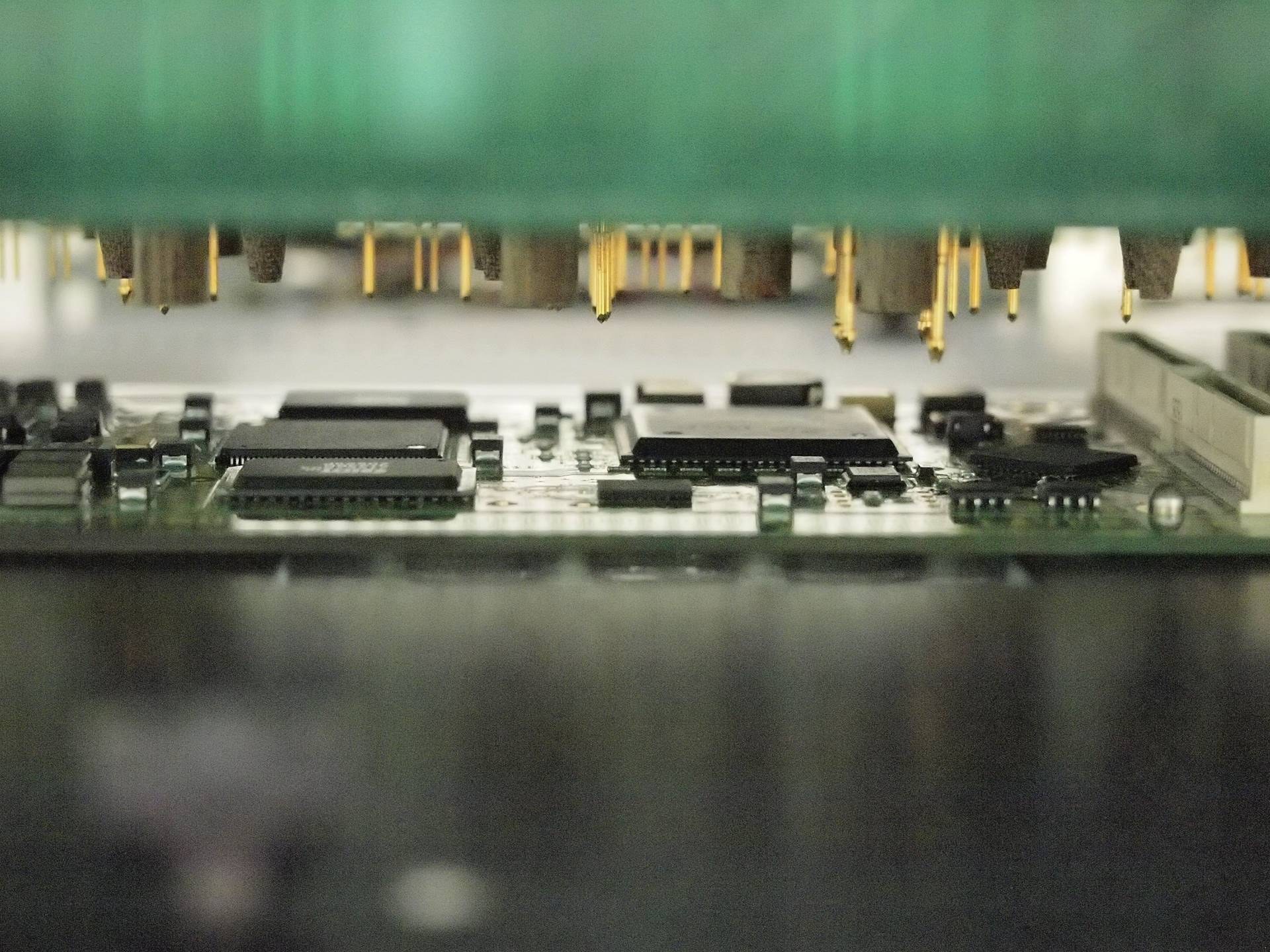
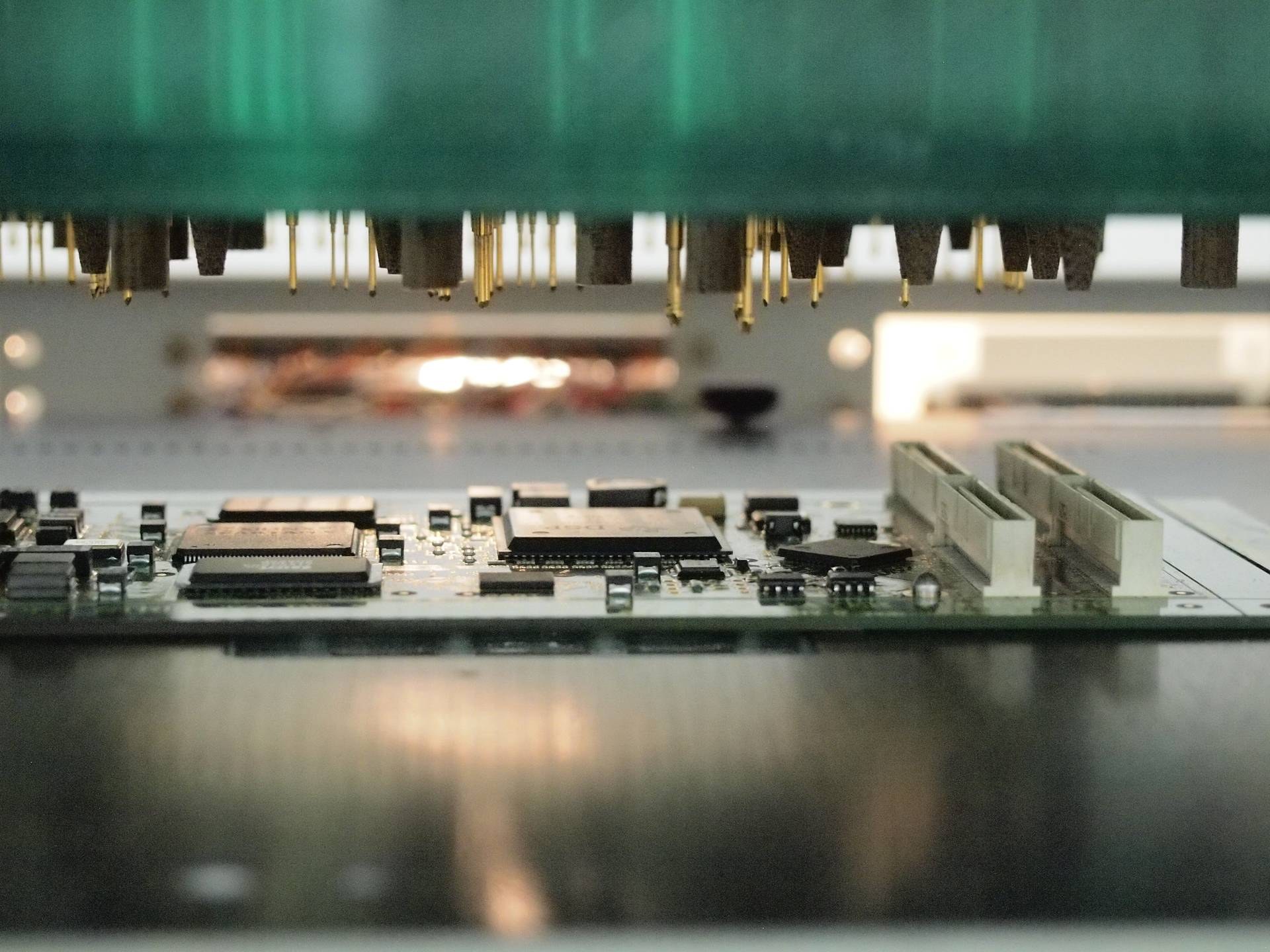
In-Circuit Testing (ICT) uses a bed-of-nails jig to gain access to various nodes on an assembled board so a variety of tests can be performed. Once the board is electrically sound, firmware is loaded into components to bring the assembly to life, and the ICT performs live tests across the assembly.
ICT must be designed in
- ICT must be considered at the start of design
- Test points must be accessible by probes
- Consider test points for functional live test
- Test jigs can measure colour & intensity of LEDs
- Many tests are possible on our ICT machine
Conformal Coating — Selective & Accurate
Conformal coating is normally required when an assembly is destined for a harsh environment. Software selects the exact sections of a PCB to be sprayed, and special spray heads apply coating at extremely low PSI — eliminating overspray onto neighbouring components.
Considerations
- There are different types of conformal coat for varied applications
- Consider which product is suitable for your application
- Consider which parts of your PCB need to be protected
- Thicker applications are achieved by multiple spray passes
- Some conformal coats contain a UV tracer for application verification
Ultrasonic Welding
Welding thermoplastic materials by means of ultrasonics has quickly become an established and simple application of this technology — ideal for product welding.
Our equipment
- We use a Branson 2000 ultrasonic welder at our factory
- The process requires a custom product "nest" to hold the parts
Low-Melt Overmoulding
Low-melt overmoulding is a simple method of waterproofing electronic assemblies while also providing mechanical support and strain relief — a clean, robust finish for demanding applications.
Need a service tailored to your board?
Tell us about your project and we'll recommend the right combination of processes.